History of Greyhound Racing and Betting in Britain
 Available in US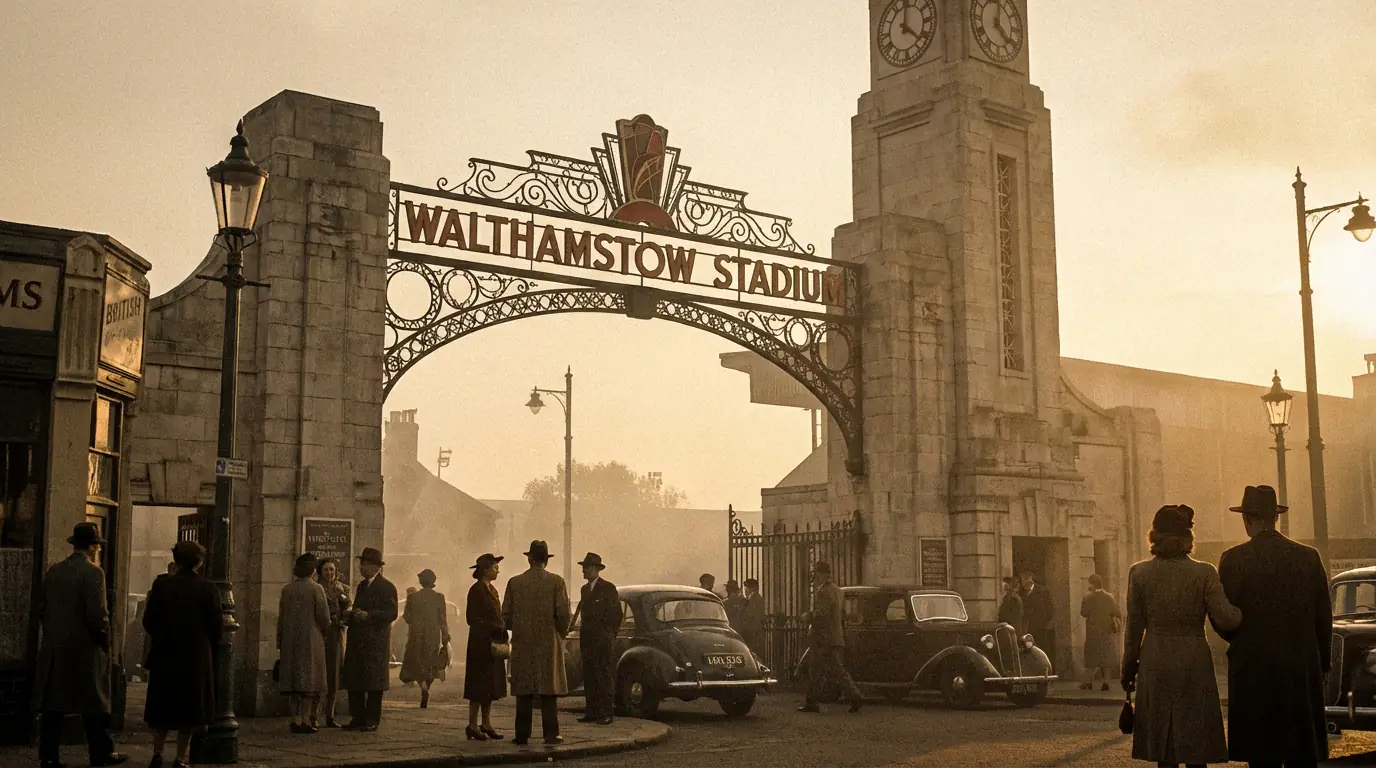
A Century on the Sand
Greyhound racing in Britain is approaching its centenary as an organised sport. What began as an experimental evening at a Manchester stadium in 1926 grew within a decade into one of the most popular spectator sports in the country, drawing millions of fans, generating enormous betting turnover and embedding itself in the cultural fabric of working-class Britain. The sport has survived world wars, social upheaval, track closures, regulatory overhauls and the digital revolution. Its story is one of extraordinary boom, painful decline and stubborn persistence.
For the modern punter betting on greyhounds online, the history might seem irrelevant — an exercise in nostalgia with no bearing on today’s form analysis or accumulator strategy. But the sport’s past shapes its present in direct ways. The structure of BAGS racing, the grading system, the relationship between tracks and bookmakers, the role of the Greyhound Board of Great Britain — all of these derive from decisions made decades ago, in response to problems the sport faced at different points in its evolution. Understanding where greyhound racing came from explains why it works the way it does now.
See how UK racing compares with Australia in UK vs Australian racing.
1926: The Night the Dogs First Ran
The first official greyhound racing meeting in Britain took place on 24 July 1926 at Belle Vue stadium in Manchester. The concept was imported from the United States, where mechanical lure racing had been developed in the early 1920s as a commercialised evolution of the coursing tradition. An American promoter named Charles Munn, working with a retired greyhound coursing official named Major Lyne-Dixon, brought the idea across the Atlantic and staged that first meeting before a crowd of around 1,700.
The event was an immediate sensation. Within months, tracks opened across Britain. By the end of 1927, annual attendances had reached 5.5 million, and by April 1928 more than forty tracks had subscribed to the newly formed National Greyhound Racing Club. By 1930, attendances at British greyhound racing exceeded those of professional football. The speed of growth was astonishing and unprecedented — no other sport in British history had scaled so rapidly from introduction to mass participation.
The reasons for the explosion were social and structural. Greyhound racing offered evening entertainment to an urban working class with limited leisure options. The meetings ran after working hours, typically starting at 7:30 p.m. under floodlights, and lasted only a couple of hours. Admission was cheap. Betting was integral — every race was a betting event, with on-course totalisator pools and bookmakers operating at the track. The sport delivered excitement, social atmosphere and the chance to gamble, all in a compact, affordable package.
The scale of early growth brought problems. Unlicensed tracks — known as flapping tracks — proliferated, operating without regulation, welfare standards or betting controls. Concerns about race-fixing, dog welfare and unregulated gambling prompted the establishment of the National Greyhound Racing Club in 1928, which became the sport’s first governing body and introduced licensing, rules of racing, and a framework for regulatory oversight. The tension between the regulated sport and the unregulated fringe would persist for decades.
The Golden Era: Post-War Peak
Greyhound racing reached its zenith in the late 1940s and 1950s. In 1946, total attendance at licensed greyhound meetings in Britain was estimated at over 70 million — a figure that rivalled or exceeded football attendances and made greyhound racing one of the best-attended sports in the world. The major London stadiums — White City, Wimbledon, Harringay, Walthamstow, Catford — drew crowds of tens of thousands for regular meetings, not just special events.
The post-war golden era was driven by the same factors that fuelled the sport’s initial growth: affordable entertainment for a population emerging from wartime austerity, combined with the social appeal of an evening out and the excitement of on-course betting. Greyhound racing occupied a distinctive cultural niche — more accessible than horse racing, more exciting than cinema, and more communal than the pub. “Going to the dogs” was not a metaphor for decline. It was a genuine leisure activity for millions of Britons.
The sport produced genuine stars. Individual greyhounds became household names, their exploits followed in newspapers and discussed in workplaces. The English Greyhound Derby — first run in 1927, initially at White City — became the sport’s showpiece event, attracting national media coverage and significant betting interest. The Derby winner was a celebrity, and the competition’s prestige mirrored that of the Epsom Derby in horse racing.
Culturally, greyhound racing permeated British life in ways that are difficult to appreciate today. Films, novels, songs and radio programmes referenced the dogs. Greyhound ownership, while never as socially elevated as racehorse ownership, was widespread among the middle class and the more prosperous working class. The stadium was a social space where class boundaries blurred, money changed hands, and the outcome of a thirty-second race determined the mood of an evening.
Decline, Closures and the Modern Revival
The decline of British greyhound racing began in the 1960s and accelerated through the following decades. The causes were multiple and reinforcing. Television provided home entertainment that competed directly with the live stadium experience. Car ownership expanded leisure options beyond the local track. Betting shops, legalised in 1961, allowed punters to bet on greyhounds without attending the stadium — convenient for the bettor, devastating for track revenues that depended on gate receipts and on-course spending.
Track closures gathered pace from the 1970s onwards. London, once the heartland of British greyhound racing, lost stadium after stadium. White City closed in 1984. Harringay in 1987. Catford in 2003. Wimbledon — the last major London greyhound stadium and home of the Derby since 1985 — closed in 2017, with the Derby relocating to Towcester and then to Nottingham. Each closure represented not just the loss of a racing venue but the erasure of a community institution and a piece of urban history.
The decline was not purely economic. Social changes reduced the sport’s natural audience. The working-class communities that had supported greyhound racing through the mid-century were reshaped by deindustrialisation, suburban migration and changing leisure habits. Younger generations did not adopt the sport with the same enthusiasm as their parents and grandparents. The cultural relevance of greyhound racing faded, and with it the commercial viability of maintaining large urban stadiums.
Amid the decline, structural reforms attempted to modernise the sport. The Greyhound Board of Great Britain, established in 2009 as the successor to the National Greyhound Racing Club, took on responsibility for regulation, welfare and promotion. The BAGS system — Bookmakers’ Afternoon Greyhound Service — had been introduced in the 1960s to provide betting content for shops and evolved into the commercial backbone of the sport, funding tracks through media rights and sponsoring the daily racing programme. BEGS extended the model to evening racing. Together, they transformed greyhound racing from a primarily live-attendance sport into a primarily media-and-betting product.
The digital era brought a second transformation. Online betting platforms gave greyhound racing access to a national audience without requiring a stadium visit. Live streaming made every BAGS and BEGS meeting watchable from any device. The sport’s frequency — its defining characteristic — became an asset in the online betting landscape, where bookmakers needed continuous content to drive engagement. Greyhound racing, with its all-day schedule and rapid-fire results, was perfectly suited to the rhythm of digital betting.
Today, UK greyhound racing operates at a fraction of its mid-century scale but remains commercially significant. Around twenty licensed tracks host regular meetings. The Derby continues as the sport’s premier event, and the competition calendar sustains year-round interest. Betting turnover on greyhound racing, while dwarfed by football and horse racing, runs into billions of pounds annually through bookmakers and exchanges. The sport has not recaptured its golden era and never will. But it has found a sustainable modern identity — smaller, leaner, and thoroughly integrated into the online betting ecosystem.
The Past Is Still Running
The history of greyhound racing in Britain is not a closed chapter. The sport’s current structure — BAGS scheduling, GBGB regulation, the grading system, the relationship between tracks and bookmakers — is a direct descendant of decisions made across a hundred years of evolution. The punter who understands that history understands why the sport operates the way it does, and why the betting markets behave the way they do. The dogs are still running. The traps still open. The thirty-second race still delivers its verdict. What changes is the world around the track, and the track has always adapted.
Explore the history of greyhound racing on the greyhoundbettinguk homepage.
