In-Play Greyhound Betting: Is It Possible?
 Available in US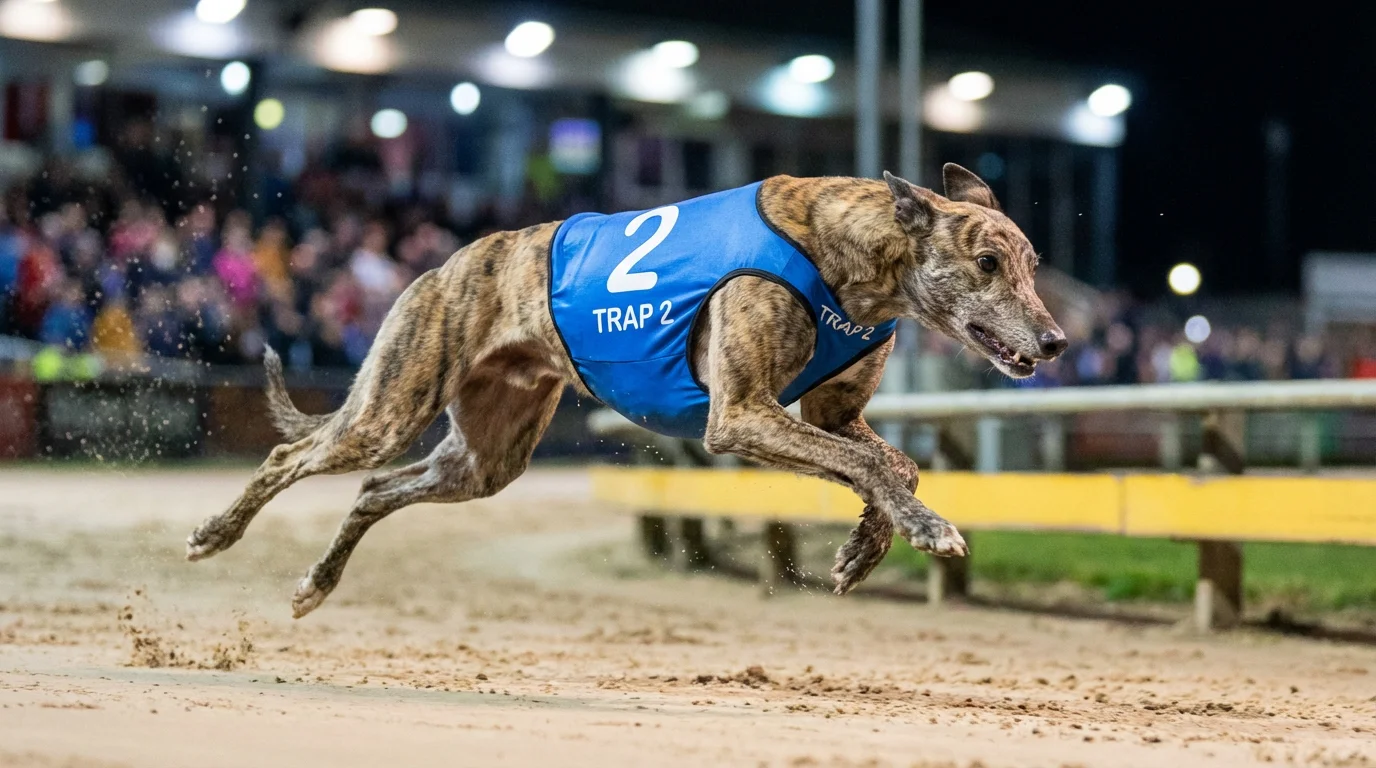
The Thirty-Second Problem
In-play betting has transformed football, tennis and cricket. The ability to bet during a match — adjusting your position as the action unfolds — has created entirely new strategies, markets and betting behaviours. Punters naturally wonder whether the same principle applies to greyhound racing. The answer is almost entirely no, and the reason is physics: a standard greyhound race lasts about thirty seconds. By the time you have processed what you are seeing, the race is over.
Football offers ninety minutes of in-play opportunity. A tennis match can last hours. Even a horse race over a mile gives the in-play bettor sixty to ninety seconds of action. A greyhound race over 480 metres unfolds in under half a minute. The dogs exit the traps, reach the first bend in four seconds, negotiate two bends and cross the line before a human could meaningfully assess, decide and execute a bet based on what is happening in real time. The gap between observation and action is too wide, and the event is too brief, for genuine in-play betting to function.
This does not mean there is no in-running element to greyhound betting. There is — but it is severely constrained, operating through different mechanisms than the in-play markets familiar from other sports. Cash-out, partial settlement and pre-race exchange trading are the tools available, and each works within limits that the greyhound racing format imposes.
Watch live to inform your in-play bets in live greyhound racing streaming.
Why In-Running Markets Barely Exist for Greyhounds
Bookmakers offer in-play betting on greyhound racing in extremely limited form. Some operators technically keep their markets open for a few seconds after the traps open, but the practical reality is that these markets are either suspended almost instantly or offer prices so heavily adjusted that they carry no value. The bookmaker’s in-play pricing algorithms cannot update fast enough to reflect the reality of a thirty-second race, so they compensate by offering extreme margins that make the bets unprofitable for the punter.
The streaming delay compounds the problem. Live greyhound streams on bookmaker platforms and apps carry a delay of two to five seconds. In a race lasting thirty seconds, a five-second delay means you are watching the race roughly 15 per cent behind real time. By the time you see a dog leading at the first bend on your screen, the dog has already reached the second bend on the actual track. Any in-play bet you place based on the stream is based on outdated information, and the bookmaker — who has access to real-time data from the track — knows the current position before you do.
Exchange in-running markets on greyhound racing are technically available on Betfair, but the liquidity is negligible. On most races, there is no money in the in-running exchange market at all. The few bets that do match are typically from automated trading systems operating on low-latency data feeds — not from manual bettors watching streams. For the average punter, the in-running exchange market on greyhound racing is a screen you can look at but cannot meaningfully participate in.
The contrast with horse racing is instructive. Horse races over a mile or more provide enough time for in-running markets to develop, liquidity to flow, and manual bettors to participate alongside automated systems. The Betfair in-running market on a major horse race is a functioning marketplace with genuine price discovery. The equivalent market on a greyhound race is a ghost town. The race is simply too short for a market to form.
Cash-Out: The Closest Thing to In-Play Control
Cash-out is the feature most greyhound punters use as a substitute for in-play betting. Offered by most major UK bookmakers, cash-out allows you to settle a bet before the race finishes — accepting a guaranteed return (or a reduced loss) rather than waiting for the final result. The bookmaker calculates a cash-out value based on the current state of the market and the likely outcome, then offers you that figure as a take-it-or-leave-it settlement.
For pre-race use, cash-out functions as a position management tool. If you placed a bet at 5/1 and the dog’s price has shortened to 3/1 before the off, your cash-out value will be higher than your original stake — reflecting the improved market position. You can lock in a profit without the race even starting. Conversely, if the dog’s price has drifted from 5/1 to 8/1, the cash-out value will be below your stake, offering you a chance to cut your losses before the traps open.
During the race itself, cash-out is theoretically available on some platforms, but the window is so brief and the interface so slow relative to the action that it is rarely practical. By the time the cash-out button updates and you tap it, the race state has changed. Some bookmakers suspend cash-out entirely once the traps open, effectively limiting the feature to pre-race use only.
Partial cash-out is a more nuanced option. Instead of settling the entire bet, you can cash out a portion — locking in some profit or recovering some stake — while leaving the remainder to run. On a ten-pound bet at 5/1 where the pre-race cash-out value is 18 pounds, you might cash out 50 per cent (receiving nine pounds) and let the other half of the bet ride. If the dog wins, you collect half of the full payout plus the nine pounds already banked. If it loses, you keep the nine pounds. Partial cash-out is a flexible tool for managing risk on bets where your confidence has shifted since placing the wager.
The bookmaker’s cash-out prices include a margin — the offered value is always less than the mathematically fair settlement. This is the cost of convenience. If you could replicate the cash-out on an exchange by laying your position at the current price, you would typically achieve a slightly better outcome. But the exchange requires liquidity, matching and manual calculation, while the bookmaker offers one tap. For most greyhound punters, the convenience outweighs the margin.
Pre-Race Exchange Trading: The Real Opportunity
The closest greyhound punters can get to active in-play trading is not during the race but before it. Pre-race exchange trading involves backing a dog at one price and laying it at a shorter price (or vice versa) as the market moves in the minutes leading up to the off. The profit comes from the price movement, not from the race outcome.
In a typical pre-race trade, you back a dog at 6.0 (5/1) on the exchange twenty minutes before the off. As money enters the market and the price shortens to 4.5 (7/2), you lay the same dog at 4.5 for a calculated stake that locks in a profit regardless of the result. If the dog wins, your back bet pays more than your lay liability. If it loses, your lay bet wins more than your back bet loses. The profit is the difference between the two prices, minus commission.
Pre-race trading on greyhound exchanges is challenging for two reasons. First, liquidity: the market may not offer enough volume to execute both legs of the trade at the prices you need. Second, price movement: greyhound exchange prices do not always move predictably. On some races, the price is static until the final two minutes, then shifts rapidly. If you are holding a back position and the price does not shorten, you are left with an unhedged bet and must either accept the risk or close at a loss.
For experienced exchange users, pre-race greyhound trading can be a modest profit source — particularly on well-attended evening meetings where liquidity supports both sides of the trade. For casual punters, it is a complex technique with slim margins that is unlikely to justify the effort relative to straightforward form-based betting.
Accept the Format, Adapt the Approach
Greyhound racing is not built for in-play betting. Thirty seconds does not provide the time window that live betting requires, and no technology or platform design can change that fundamental constraint. The punter who accepts this — and focuses their energy on pre-race analysis, pre-race price taking and pre-race position management through cash-out or exchange trading — is working with the sport’s structure rather than against it. The race itself is for watching, not for betting. The value is captured before the traps open.
Find all in-play betting guides on the greyhoundbettinguk homepage.
