Greyhound Betting Exchanges vs Bookmakers
 Available in US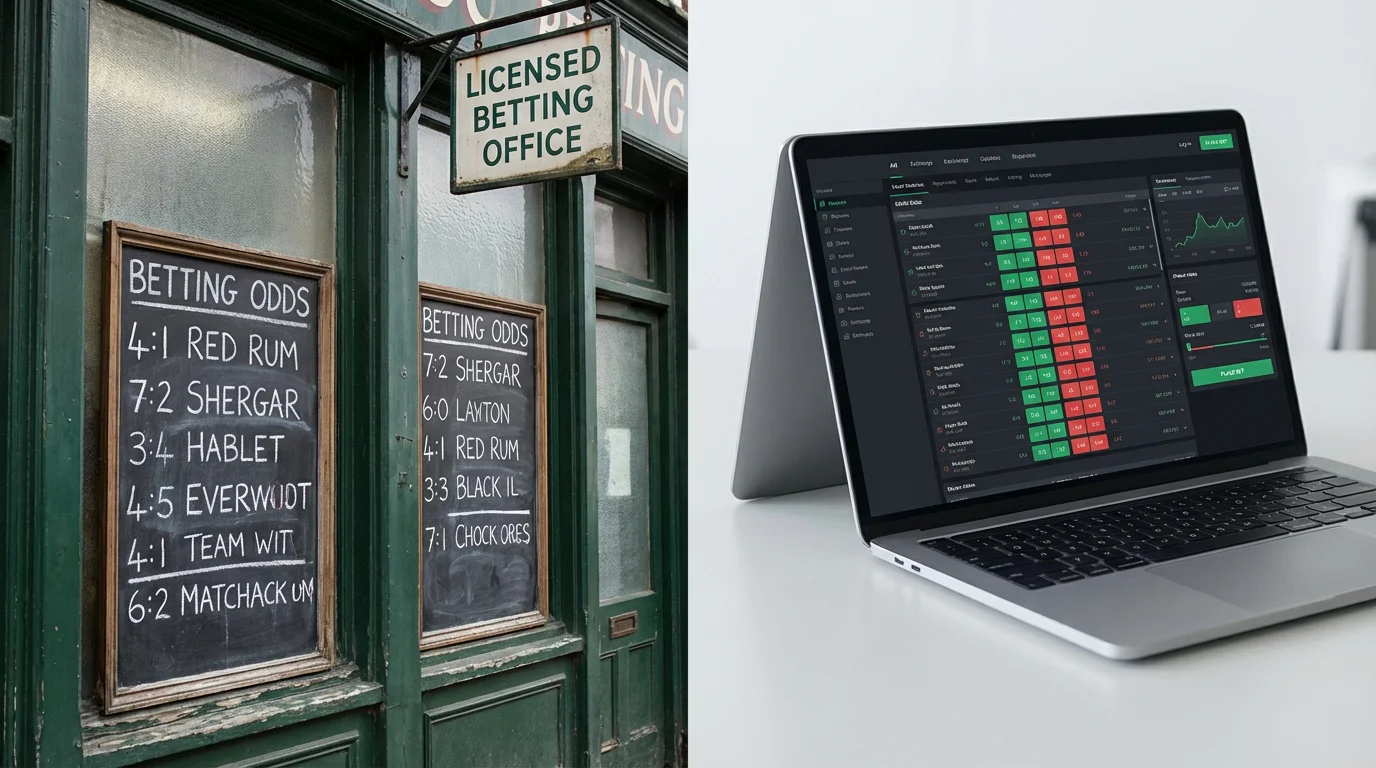
Two Models, One Market
When you bet with a bookmaker, you bet against the house. The bookmaker sets the odds, accepts your stake, and pays out if you win. Their profit comes from the overround — the built-in margin across all prices in a race that ensures the book collects more than it pays out over time. When you bet on an exchange, you bet against other punters. The exchange provides the platform, matches your bet with someone taking the opposite side, and charges a commission on your net winnings. The exchange does not care who wins. It earns the same percentage regardless of the result.
Both models serve the greyhound betting market in the UK. Both are legal, regulated and widely used. But they differ in pricing structure, available markets, liquidity, promotional coverage and practical user experience. Choosing between them — or, more accurately, knowing when to use each — is an operational decision that affects your bottom line on every bet.
Explore lay betting on exchanges in greyhound lay betting.
How Exchanges Work: Commission vs Margin
On a betting exchange, every market has two sides. The back side is where you bet on a dog to win — identical in principle to a bookmaker bet. The lay side is where you bet against a dog — offering odds to another punter and paying out if the dog wins. Every back bet must be matched by a lay bet for the transaction to complete. The exchange facilitates this matching automatically.
The prices on an exchange are set by the punters themselves, not by a central authority. If a punter offers to lay a dog at 5.0 (4/1) and another punter wants to back it at that price, the exchange matches them. This peer-to-peer pricing can produce odds that are better than bookmaker prices, because there is no overround built into the exchange. Instead, the exchange charges a flat commission on net winnings — typically 2 per cent on Smarkets and around 5 per cent on Betfair (with volume discounts).
The difference between commission and overround is significant over time. A bookmaker’s overround on a greyhound race might be 118 to 125 per cent, meaning the sum of implied probabilities across all six runners exceeds 100 by 18 to 25 points. That excess is the margin you pay on every bet. On an exchange, the equivalent cost is the commission on winning bets only — you pay nothing on losing bets. Over hundreds of bets, the commission model is cheaper for the punter, particularly for those who win frequently enough that the commission becomes their primary cost.
There is a subtlety, though. Exchange prices are not always better than bookmaker prices. A bookmaker running a best odds guaranteed promotion might offer 5/1 on a dog that the exchange has available at 5.2. If the SP drifts to 7/1, the bookmaker pays 7/1 under BOG while the exchange pays whatever price you locked in. The bookmaker also offers promotional credits — free bets, acca boosts, enhanced odds — that the exchange does not. When you factor in promotions, the bookmaker can be the better deal on specific bets, even though the exchange has a structurally lower cost.
Liquidity: The Exchange’s Achilles Heel for Greyhounds
Liquidity is the amount of money available in an exchange market to match your bet. In a Premier League football match, exchange liquidity runs into millions of pounds. You can place a thousand-pound bet and have it matched instantly. In a greyhound race, the picture is very different.
Exchange liquidity on UK greyhound racing is thin. A typical BAGS afternoon race might have a few hundred to a few thousand pounds in the Betfair win market. Smarkets may have even less. This means several things for the practical bettor. First, large stakes may not be fully matched. If you want to back a dog for fifty pounds at 4.0 and only twenty pounds is available at that price, you get a partial match. Second, your bet can move the market. On a thin greyhound exchange, a fifty-pound bet at a specific price can shift the entire market, which is not an issue with bookmakers who absorb bets without visible price movement. Third, lay markets may be very thin or non-existent for some runners, making lay betting on outsiders impractical.
Liquidity follows attention. Evening meetings at popular tracks — Romford, Hove, Sheffield — attract more exchange activity than Tuesday afternoon BAGS meetings at smaller venues. Feature events and open races generate more liquidity than standard graded races. The pre-race period closest to the off carries more volume than the market hours earlier. If you plan to use exchanges for greyhound betting, timing your bets to coincide with peak liquidity windows is not optional — it is essential for getting matched at the price you want.
Place markets on greyhound exchanges are particularly illiquid. Win markets carry most of the volume; place, forecast and tricast exchange markets barely function for greyhound racing. If your betting involves each way, forecasts or tricasts, the exchange is effectively irrelevant for those bet types, and the bookmaker is your only realistic option.
When to Use the Exchange, When to Use the Bookmaker
The exchange is superior for win bets on well-attended meetings where liquidity is adequate and the exchange price exceeds the bookmaker’s price (after accounting for commission). This is most likely to occur at evening meetings, feature events and any race where the exchange market is active. The commission model means that frequent winners pay less in friction on exchanges than at bookmakers, where the overround taxes every bet regardless of outcome.
The exchange is also the only option for lay betting. If your greyhound strategy includes laying vulnerable favourites — a legitimate and potentially profitable approach — you need an exchange. Bookmakers do not accept lay bets.
The bookmaker is superior when BOG applies (win singles at early prices on qualifying meetings), when promotional value is available (free bets, acca boosts, enhanced odds), when you are betting on forecast or tricast markets (no viable exchange alternative), and when exchange liquidity is too thin to match your bet at an acceptable price. For BAGS afternoon meetings with modest exchange activity, the bookmaker is usually the more practical choice.
The optimal approach for a regular greyhound punter is to maintain accounts on both platforms and route each bet to the venue that offers the best deal. A win single on a Saturday evening open race might get a better price on the exchange. The same punter’s Tuesday afternoon forecast bet goes through the bookmaker. A free bet from a Tuesday qualifier is used at the bookmaker but laid off on the exchange for guaranteed extraction. This hybrid approach captures the advantages of both models without being locked into the limitations of either.
The Right Tool for the Right Job
Exchanges and bookmakers are not competing religions. They are different tools with different strengths, and the punter who uses both intelligently pays less for their betting than the one who uses only one. The exchange offers lower structural costs and the ability to lay. The bookmaker offers promotions, deeper forecast markets, BOG and the certainty of instant matching. Understanding which platform serves each bet best is not a loyalty question. It is a maths question, and the answer changes with every race.
Compare exchanges and bookmakers on the greyhoundbettinguk homepage.
