Greyhound Tote and Pool Betting: Jackpots and Dividends
Best Greyhound Betting Sites – Bet on Greyhounds in 2026
Loading...
A Different Way to Bet on the Dogs
Most greyhound bets in the UK are placed at fixed odds — you take a price, the dog wins, the bookmaker pays. Pool betting works differently. Instead of betting against a bookmaker at a set price, you contribute your stake to a shared pool alongside every other punter backing the same market. After the race, the pool is divided among the winners, minus the operator’s take. Your payout depends not on a pre-agreed price but on how many other people picked the same result.
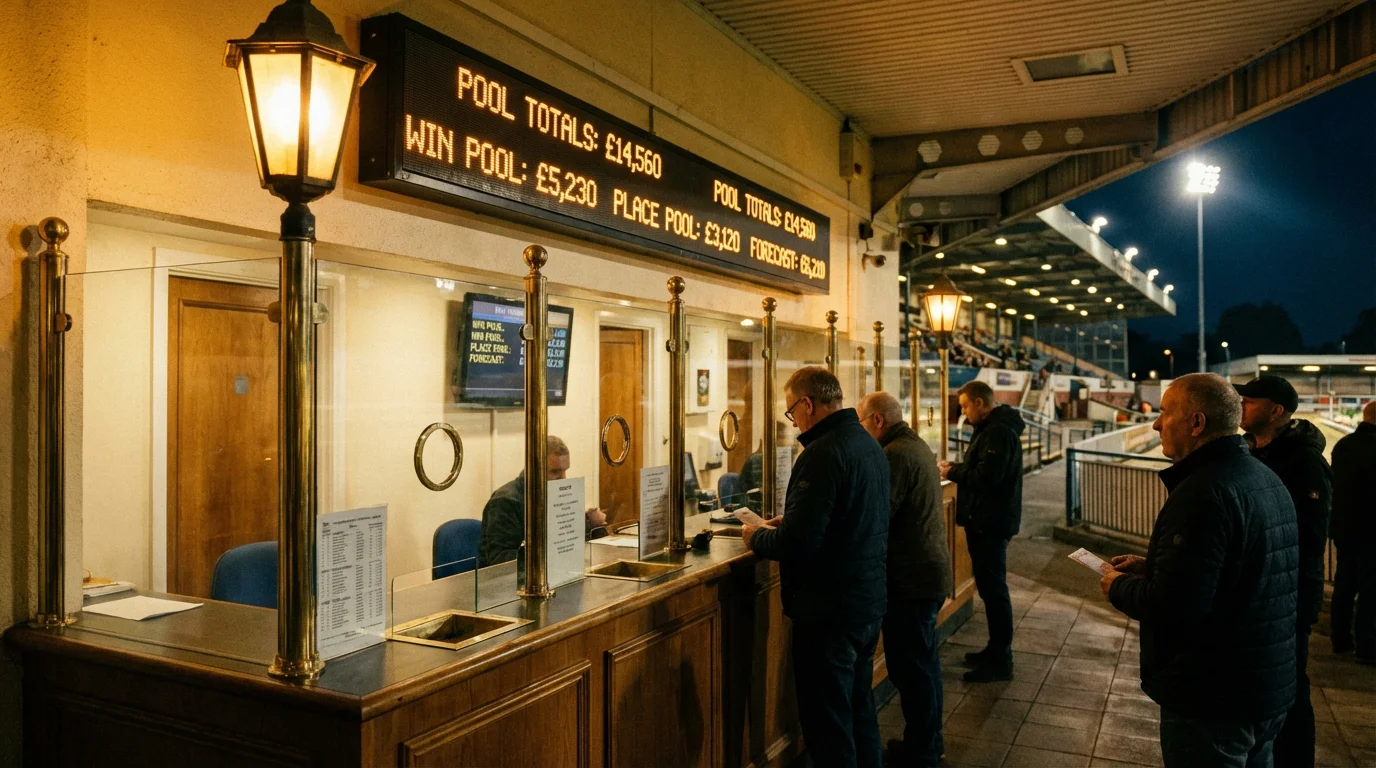
Pool betting on greyhound racing operates through the tote system. The tote — originally the Horserace Totalisator Board, established in 1928 — is now run by the UK Tote Group, an independent company separate from Betfred since the Alizeti consortium acquired a stake in 2019. The tote runs pool betting across both horse racing and greyhound racing. Tote greyhound pools include win, place, exacta (forecast), trifecta (tricast) and jackpot bets. The dividends are declared after each race and can vary from disappointingly small to spectacularly large, depending on the pool size and the result.
For the greyhound punter, pool betting is an alternative to fixed-odds markets — not a replacement. It excels in specific situations and underperforms in others. Understanding when pool betting offers better value than fixed odds, and when it does not, is a skill that most punters never develop because they never engage with the tote at all. That is a missed opportunity.
Tote Bets on Greyhound Racing
The tote win pool is the simplest form: you pick a dog to win, your stake enters the pool, and if your dog wins, you share the pool with every other winning ticket. The dividend is calculated by dividing the total pool (minus the operator’s deduction, typically around 15 to 20 per cent) by the number of winning units. If the pool is five thousand pounds, the deduction is 15 per cent, and one hundred units backed the winner, the dividend is 42.50 per unit — roughly 41/1 after your stake is returned.
Tote place betting covers the top two finishers in a standard six-runner field. The place pool is divided among tickets backing dogs that finished first or second. Dividends on the place pool tend to be modest — often lower than fixed-odds place returns — because the pool is split across two outcomes and more tickets typically cover the placed dogs.
The tote exacta is the pool equivalent of a fixed-odds forecast. You name the first and second finishers in exact order, and the pool is divided among those who got it right. Exacta dividends can be significantly higher or lower than the computer straight forecast dividend at fixed odds, depending on pool distribution. When the result is predictable and heavily backed, the exacta pays less than the CSF. When the result is unusual and few tickets cover it, the exacta can pay substantially more.
The tote trifecta mirrors the tricast — first, second and third in exact order. Trifecta pools on greyhound racing tend to be smaller than on horse racing, because fewer punters engage with greyhound tote betting at all. Smaller pools can produce extreme variability in dividends: a result backed by many punters produces a low trifecta payout, while an unlikely result can generate huge returns simply because the pool is shared among very few winners.
The operator’s deduction — the percentage taken from the pool before dividends are calculated — is the tote’s equivalent of the bookmaker’s overround. In UK greyhound pool betting, deductions typically range from 15 to 25 per cent depending on the bet type, with trifecta and jackpot pools carrying higher deductions than win pools. This deduction is fixed and transparent, which is an advantage over fixed-odds betting where the bookmaker’s margin is hidden in the individual prices.
Jackpot Bets and Rollovers
Greyhound jackpot bets ask you to pick the winner of multiple consecutive races — typically six — at a single meeting. All stakes enter a jackpot pool, and the pool is shared among those who correctly predict all six winners. If nobody picks all six, the pool rolls over to the next jackpot, growing until it is eventually won.
The appeal of jackpot betting is the potential for a life-changing payout from a small stake. A two-pound jackpot bet that hits all six legs of a rollover pool can return thousands or even tens of thousands of pounds. The mathematics, of course, are daunting. Picking six consecutive greyhound winners from six-runner fields — even with perfect form analysis — has a probability somewhere in the region of one in 46,000 to one in 50,000 at pure random chance. Analytical skill improves those odds, but not by enough to make jackpot betting a positive expected value proposition in the absence of a rollover.
Rollovers change the equation. When a jackpot pool rolls over one or more times without being won, the accumulated pool can reach a level where the expected dividend, even accounting for the low hit probability, exceeds the cost of entry. These are the moments when jackpot betting transitions from entertainment to a bet with arguable value. Monitoring rollover levels and entering the pool only when the accumulated fund has reached a threshold that justifies the stake is the disciplined approach.
Pick-six or similar multi-race pool formats are offered by some bookmakers alongside the official tote jackpot. These operator-specific pools may carry different deduction rates and different rollover rules. The principle is the same — pick multiple winners for a share of the pool — but the terms vary, and comparing them before entering can mean the difference between a 15 per cent deduction and a 25 per cent deduction on the same result.
Permutation entries are available on most jackpot-format bets. Instead of selecting one dog per race, you can select two or three dogs in each leg, covering multiple combinations. The cost multiplies accordingly — selecting two dogs in each of six races produces 64 combinations, costing sixty-four times your unit stake. Permutation entries improve your chance of hitting the jackpot but inflate the cost, and the net expected value per pound staked may be no better than a single-line entry. The advantage is variance reduction: you are more likely to win something, even if the return per unit is unchanged.
When Pool Betting Beats Fixed Odds
Pool betting outperforms fixed odds in two specific scenarios. The first is when an unlikely result occurs. The fixed-odds computer forecast formula produces a mathematical dividend based on starting prices. The tote exacta dividend is determined by pool distribution. When a heavily backed favourite finishes first and a well-backed second favourite finishes second, the CSF might actually pay more than the exacta, because the pool tickets are concentrated on the popular combination. But when an outsider fills a place — particularly in the exacta or trifecta — the pool often pays substantially more than fixed odds, because fewer tickets cover the unexpected result.
The second scenario is when pool sizes are small relative to the potential dividend. On a quiet afternoon BAGS meeting, the tote trifecta pool might contain a few hundred pounds. If the result is an unusual combination and only a handful of tickets cover it, the trifecta dividend can be disproportionately large compared to the CSF tricast. This is the inefficiency that tote specialists exploit — small pools, unusual results, and dividends that exceed what fixed-odds mathematics would produce.
Pool betting underperforms fixed odds when results are predictable and heavily backed. If the favourite wins and the second favourite finishes second, the tote exacta pool is divided among a large number of winning tickets, and the dividend may be lower than the CSF. Backing favourites through the tote is rarely advantageous because the pool distribution is skewed toward the popular selections.
The strategic tote punter focuses on races where the result is difficult to predict, where outsiders have a genuine chance, and where the pool sizes make unusual dividends possible. They use pool betting for exactas and trifectas on open races and fixed odds for win bets on predictable ones. The two systems serve different purposes, and the punter who uses both appropriately captures more value than the one who uses only fixed odds.
The Pool Has Its Own Logic
Pool betting rewards contrarian thinking in a way that fixed-odds betting does not. In fixed-odds markets, the bookmaker pays the same dividend regardless of how many other punters backed the same dog. In pool betting, every ticket on the winner dilutes your share. The tote punter profits most when they back outcomes that few others have backed — an outsider in the exacta, an unlikely trifecta combination, a rollover jackpot that has grown past its value threshold.
This is a fundamentally different analytical mindset. Fixed-odds punting asks: is this dog underpriced? Pool betting asks: is this result under-backed? The question sounds similar but produces different answers. A dog might be fairly priced at 5/1 in fixed odds but dramatically under-backed in the tote exacta pool because the public has loaded on two other dogs. Finding that kind of gap requires monitoring pool distributions — available in real time on tote platforms — and acting when the numbers diverge from your form assessment. It is an unusual skill, and one that most greyhound punters never cultivate. That, in itself, is the edge.